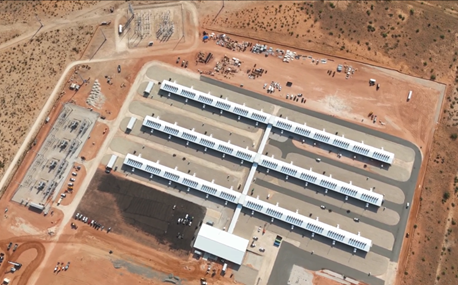

CleanSpark (NASDAQ: CLSK) acquired its first bitcoin mine in 2020 with the acquisition of bitcoin miner ATL Data Center. It would be the first of many strategic acquisitions as the clean energy company dove head on into bitcoin mining.
That acquisition bestowed CleanSpark with 0.2 EH/s of hashrate – 0.1% of Bitcoin’s hashrate at the time. Fast forward to 2025, and CleanSpark now operates 50 EH/s, which represents 4.5% of Bitcoin’s total hashrate.
CleanSpark quickly became one of the largest bitcoin miners in the world following its expansion into bitcoin mining, and now, it’s expanding yet again into AI services, all while keeping its bitcoin mining engine underneath.
As we’ve seen across the bitcoin mining sector, bitcoin mining has become a launchpad for other compute loads, and CleanSpark plans to use hashrate as a flexible source of load that can operate alongside lucrative AI loads.
As CleanSpark CEO Matthew Schultz said on a recent Mining Pod, “this is an expansion, not a pivot.”
Even with this expansion top of mind, CleanSpark’s fiscal year 2025 earnings show that the company’s core business will serve as a North Star as CleanSpark charts new waters.
CleanSpark’s fiscal year 2025 results
During the 2025 fiscal year ended September 30, CleanSpark mined 7,873 BTC for $766 million in revenue and $364.5 million net profit, marking a complete reversal from a net loss the prior year (-$145 million). CleanSparks adjusted EBITDA rose from $245.8 million in FY2024 versus $823.4 million in FY2025.
CleanSpark also reported its marginal cost to mine bitcoin as under $43,000 marginal cost to mine a Bitcoin, highlighting that CleanSpark’s margins are still healthy despite the recent decline to hashprice.

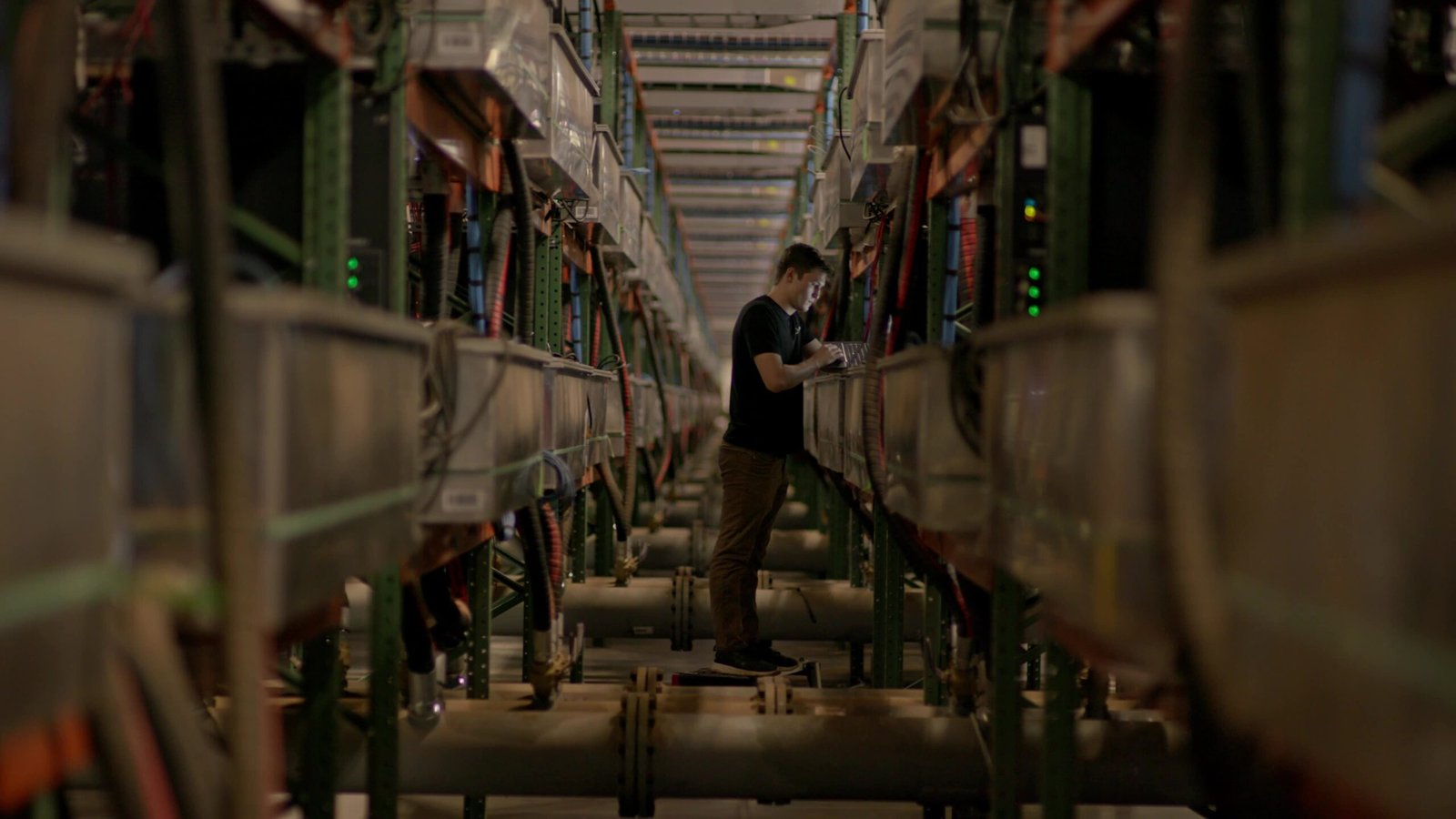
CleanSpark is operating over 266,000 ASIC miners that produce 50EH/s with a 16.07 J/TH energy efficiency, and it forecasts that it will have 57EH/s online at the end of 2025.
Management did hammer a point in CleanSpark’s FY2025 earnings call regarding fundraising for its expansions: CleanSpark did not issue a single new share via an equity offering in 2025 while hitting their scaling goals. With margins around 55% (flat from last year), the company can use cash flow to fund portions of its expansions.
CleanSpark holds 13,033 BTC, worth about $1.12 billion, though a portion (~5,444BTC) is posted as collateral.
CleanSpark’s AI and bitcoin mining expansions
As it eyes expansion into AI loads, CleanSpark will employ the same distressed asset M&A strategy that made its name in bitcoin mining.
“We will continue acquiring distressed assets,” CEO Matt Schultz said on its earnings call.
Typifying this approach, CleanSpark’s recently acquired an Austin County, Texas site with 285 MW of ERCOT-approved power. Schultz highlighted this site, alongside an expansion at its Sandersville, Georgia sites as the company’s first targets for AI load.
Schultz noted on The Mining Pod that CleanSpark “beat out a trillion dollar hyperscaler because we told the utility that we’d start buying power in 6 months instead of the 2-3 years it would take to build out an AI campus.”
CleanSpark’s dual-load design for AI and bitcoin mining
Even with its expansion into AI, CleanSpark isn’t abandoning bitcoin mining. Instead, the company plans to use it to augment and complement its budding AI business.
During its earnings call, CleanSpark management relayed a conversation with a Georgia utility executive who effectively said, “We need about 120 hours a year where someone can give power back.” Bitcoin has historically filled that role; now, the solution seems to be a blend of AI and mining at the same campuses so a portion of the load remains interruptible.
CleanSpark’s plan is to use AI campuses for stable, premium-priced long-term tenants but keep a slice of Bitcoin mining at or near those sites to preserve flexible load for the utility and earn better power rates.
How CleanSpark monetizes its bitcoin stash
For the hardcore Bitcoiners the most interesting part of the call might be the detail on Digital Asset Management (DAM), an internal desk that runs options strategies on CleanSpark’s bitcoin treasury.
They’ve launched three programs:
- Spot plus: covered calls tuned to optimize near-term cash needs from production
- Yield: longer-dated, lower-delta covered calls to generate ongoing yield on the treasury
- Cash-secured puts: written using the premium corpus generated from the first two strategies
In Q4 alone, CleanSpark pulled in $9.3M in option premiums, lifting effective realized prices to ~$116k per BTC vs ~$111.7k spot, and it generated ~12% annualized yield on covered calls and ~8% on cash-secured puts. And even turned a “free” Bitmain option that would have expired worthless into ~$7M of cash.
All roads lead to load
CleanSpark quickly made its name in bitcoin mining, an expansion that many said CleanSpark made “too late” at the time, Schultz said on The Mining Pod.
Now, CleanSpark finds itself on the cusp of yet another expansion, and for any critics who say they are too late for this revolution, Schultz said on The Mining Pod that CleanSpark has been here before. And it plans to take what it learned from its old venture to carry it forward into the new.
“Our business will continue to prioritize efficiency. That’s part of our DNA from the microgrid days,” Schultz said on The Mining Pod. “I think you’re going to see an interesting hybrid approach to Bitcoin mining, and Bitcoin mining is always going to be at the core of who CleanSpark is.”