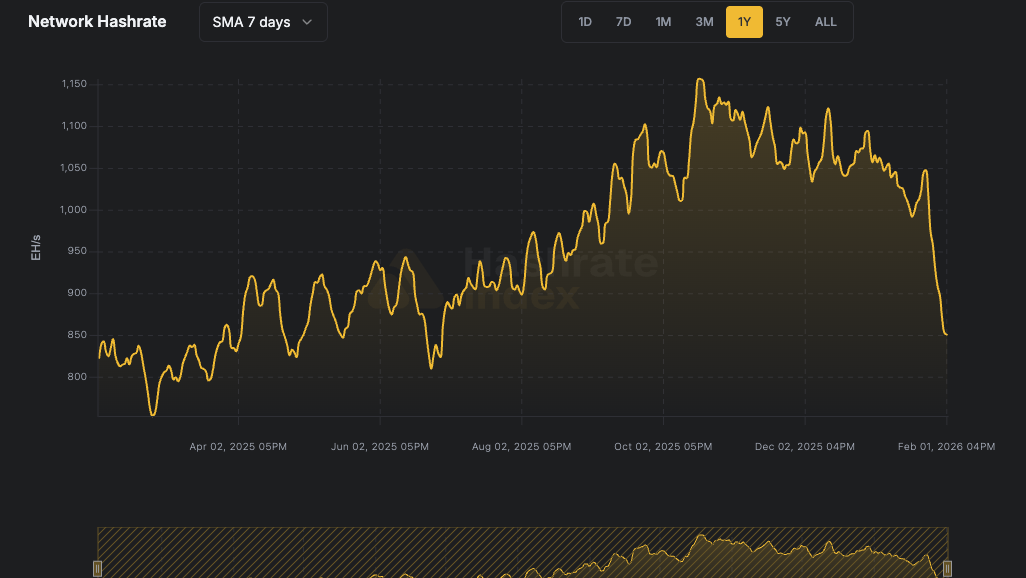

The Bitcoin mining industry is experiencing a whirlwind of activity as summer draws to a close, with tariff impacts reshaping the ASIC market, new hardware releases, and major corporate deals facing shareholder pushback. From American Bitcoin’s volatile debut to investors challenging Core Scientific’s merger, we’re navigating complex market trends that are reshaping the bitcoin mining landscape.
In addition to covering the latest news, on the latest Mining Pod news roundup, the Blockspace team spoke to Sarah Tang, Senior Account Manager at Luxor’s ASIC Trading Desk. We discussed how tariffs are redirecting global mining equipment flows and which ASIC miners are in the highest demand.
Below is an edited transcript of the conversation.
Listen to the full podcast episode on YouTube by clicking here.
American Bitcoin has choppy Nasdaq debut
Will: Alright, so for the biggest news this week: what happened with American Bitcoin’s debut?
The much anticipated launch of American Bitcoin saw something we’ve been seeing a lot recently – extreme volatility to the upside. American Bitcoin saw as much as 80% gains on the Nasdaq during the day, reaching a high of $13 per share after trading commenced, then we saw an acute selloff. It’s now trading around $6.38.
That whipsaw is not great for investors looking to get into mining stocks. It’s also odd because this was telegraphed months before – we knew about the merger with Gryphon Digital going back to April and May. All the numbers were already baked in. We saw this with Circle’s IPO too – up 200% initially, then down. From a general market perspective, the question is why on listing day are we seeing these outsized gains?
Bitcoin ASIC miner market update
Colin: Now, I’d like to welcome to the stage Sarah Tang, a senior account manager at Luxor who works on their ASIC Trading Desk.
Sarah, how are tariffs impacting ASIC pricing and demand right now?
Sarah Tang: Tariffs have been a hot topic lately. We’re looking at nearly 50% on rigs from China and 22% from countries like Indonesia and Malaysia. That puts a real premium on landed new-gen machines right now. Importers pass those extra costs along to buyers, which stretches out the ROI and extends payback periods.
We’re seeing operators with cheaper power leaning towards mid-gen models like the J-Pros and S19s – they strike a better balance between cost and efficiency. At the same time, shipments are getting redirected out of the US into tariff-free regions like Canada, pulling a lot of new supply north of the border.
Colin: Which of the newer models are miners asking for most?
Sarah: Most of the new-gen sales were the usual suspects – S21 Plus, lots of MicroBT M60 series, Canaan A1566 Pros. The M60 machines are crazy – they basically sell out the second they hit the market. MicroBT usually only releases a limited amount of spot supply, so those get picked up very quickly.
Our team has also moved a lot of the A2 SEAL miners, both hydro and air-cooled. The air-cooled is sold out right now, but hydros are still available. Everyone’s waiting for Bitdeer to release the A3.
Will: Why are these selling out so fast?
Sarah: The SEAL miners are like the newest toy everyone wants to get their hands on. It might be part of a marketing strategy where they release a certain amount to get everyone excited about it. Even when other manufacturers launch new machines, they’re not readily available – shipping starts maybe 4-6 months after launch.
Colin: I think what’s working against the market is that Bitdeer is keeping a pretty sizable portion – like half the hash rate they produce – for self-mining. Scaling up to Bitmain’s size is pretty hard, so they’re constrained for what they can produce.
Will: What about Proto? Any updates on pricing and availability?
Sarah: This has been a hot topic lately during Q3. Unfortunately, I couldn’t make it out to the launch of the Protominer, but my colleague Michael was there actually. I remember our team pinging him like crazy, asking if they released the miner yet.
It’s incredible – 119 terahashes, 14 joules per terahash, nine hash boards. I had clients reach out right away asking for pricing and availability. But it looks like we’re going to have to wait a little longer on that.
They did say that repairs or replacements would take under two minutes. We’re eager to get our hands on one of these to see how effective that design is, and then throw our feedback and thoughts up on Hashrate Index.
Colin: Are you seeing slackening demand in the futures market because of tariff uncertainty?
Sarah: Miners are hesitant to place future orders out of Asia given how unpredictable tariffs have become. That uncertainty has shifted demand toward US-based production where buyers see more stability and fewer risks compared to sourcing from China or Southeast Asia.
We’re already seeing a shift toward US-based production and assembly. Shipping parts into the US and assembling them locally carries a much lower tariff than importing full miners, which is why some manufacturers add a production fee to offset these tariffs. I believe we’re going to see other larger manufacturers looking into opportunities within the US to manufacture their machines.
We’ve seen hosting demand go up in different regions globally, especially Canada. When Bitdeer acquired their 100-megawatt site in Alberta back in February for over $20 million, that gave other larger miners the green light to come to Canada to check out what we have available.
JonesResearch downgrades IREN to a hold
Will: Ok, moving on to more news. Colin, what’s the story with Jones Research downgrading IREN?
Colin: Jones Research is saying pump the brakes on IREN. They’ve downgraded from buy to hold, flagging risks to Iren’s AI cloud model. This is less bearish – they’re not saying sell, just calm down. IREN is up 400% from April lows and 170% year to date, so that’s pretty reasonable.
They question the shift away from multi-tenant colocation, noting that hyperscaler customers negotiate tough terms and Iren’s focus on its own cloud growth may reduce prospects for third-party leases. They warn the company could be trading one capital-intensive treadmill in mining for another in AI infrastructure, and flag dilution risks from further equity issuance to fund GPU deployments.
All pretty reasonable when you consider their ambitions are going to be very costly. They’re trading one CapEx-intensive industry for another – Bitcoin mining to AI. They’re buying the GPUs, putting them on their own sites, and renting out the compute. Jones Research worries about the sustainability of that model if there’s greater GPU supply and more entrants coming to market.
Why Two Seas Capital is urging shareholders to vote against Core Scientific’s CoreWeave acquisition
Will: Two Seas Capital is urging Core Scientific shareholders to vote against the $9 billion Core Weave deal. Two CS, which owns roughly 6.3% of Core Scientific, called the deal the product of a flawed process that undervalues the company. They say the board pursued a sale without meaningful market outreach.
The all-stock deal would see Core Scientific shareholders receive 0.1235 shares of CoreWeave common stock. It was about a $9 billion deal at announcement, but CoreWeave has dropped since then. They had their unlock for early investors, and the price has been trading around $90 versus close to $120 when the deal was announced.
Core Scientific management gets paid out around $200 million if this goes through. They have a double trigger clause where if they merge, all the RSAs vest immediately. Then if they get removed from the new company, they get all that immediately as well. Pretty uncommon to see a double trigger – management was taking care of themselves with this one.
Colin: Two Seas might be the lone voice crying out in the wilderness, but reflecting what a lot of Core Scientific stockholders feel. Many weren’t happy with the all-stock deal – they were hoping for cash. There’s a chance there’s a chorus of people who are unhappy. It’s unclear whether this will actually materialize into anything consequential enough to derail the deal.
Will the Core Scientific-CoreWeave deal go through?
Will: I don’t think it’s going to go through based on how CoreWeave is trading. There’s some really interesting filings from Core Weave about how this deal happened that are fascinating to read through. CoreWeave is at $87 right now – that’s just not a great place. If the agreement could have been executed quickly, maybe it would be okay, but with the review period, I don’t see this going through.